Insights from Latin America and New York, practical perspectives on wealth planning and governance, and the priorities shaping our next steps.
Feature 01 / 09A Message from Our Director
Understanding the Market and Shaping Our Direction
Welcome to the second edition of Nevis Finance Quarterly.
Our recent engagements in Latin America and the United States provided an opportunity to hear the concerns behind enquiries about Nevis and consider how those conversations should shape our work.
Against a backdrop of geopolitical uncertainty and changing regulation, families and business owners expressed practical interests in preserving wealth, diversifying ownership and planning for succession. They wanted to understand how Nevis structures might serve their circumstances, who could advise them and how those arrangements would operate over time.
In Latin America, we encountered different levels of familiarity with Nevis. Some advisers were ready for technical discussions; others, particularly in Brazil, needed a clearer introduction to the jurisdiction. These differences will inform our approach, combining practical education with the development of credible local professional relationships.
In New York, discussions with professionals exposed to liability risks, construction and real estate developers reinforced the relevance of ownership, asset protection and succession planning. They also highlighted the importance of working with specialist advisers who can assess Nevis structures within a client’s wider legal, tax and financial circumstances.
For me, the principal lesson is that visibility must be followed by sustained engagement. Our follow-up is already generating requests for information and introductions to registered agents. The Asset Protection Conference in Nevis and the Premier of Nevis’ recent engagement with professionals in Panama have provided further opportunities to strengthen these connections.
These experiences are shaping our proposed 2027 programme, including further engagement in Brazil and Panama and continued development of specialist relationships in the United States. Industry consultation will help ensure that our priorities reflect practitioners’ experience and the opportunities they see.
To our international readers, Nevis is open for business. We welcome enquiries from advisers, investors, families and business owners seeking to understand what our jurisdiction can offer. Nevis Finance can help you explore those opportunities and connect with the relevant professionals.
I look forward to working with our industry professionals and international partners as we build on these relationships and turn interest in Nevis into lasting opportunities for the sector.
Rita O. Hawkins, FCCA
Director, Nevis Finance
Feature 02 / 09Nevis Finance in Action
International Conversations and Local Engagement
16–18 September 2026
STEP LATAM: From Plans to Engagement
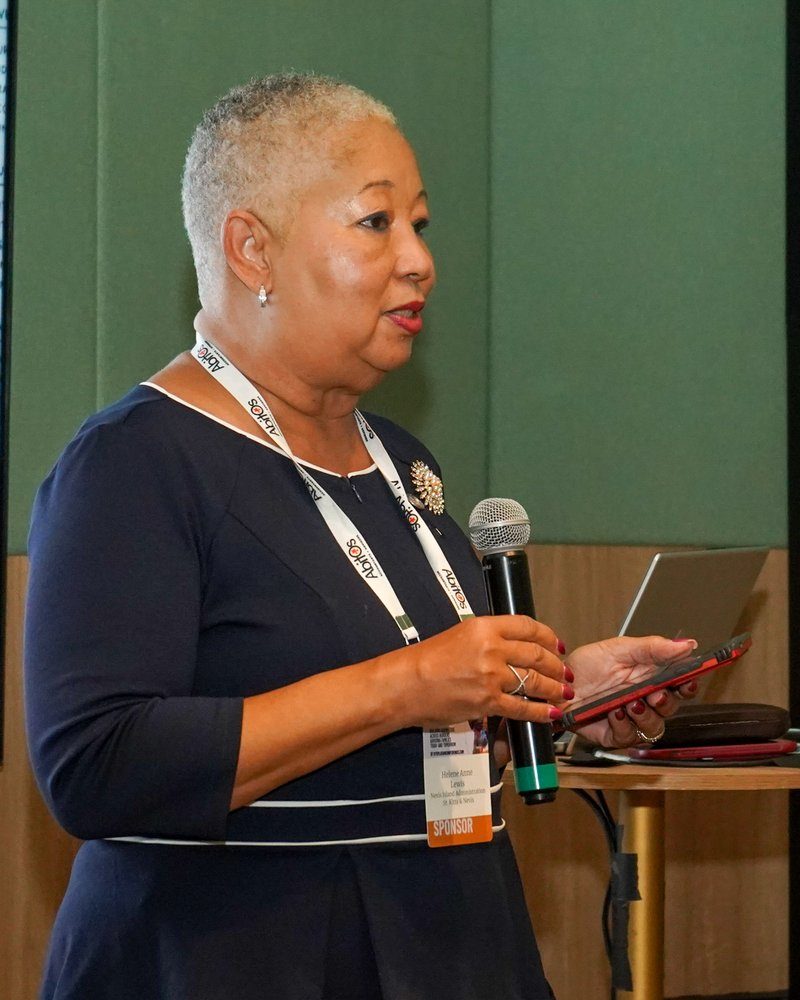
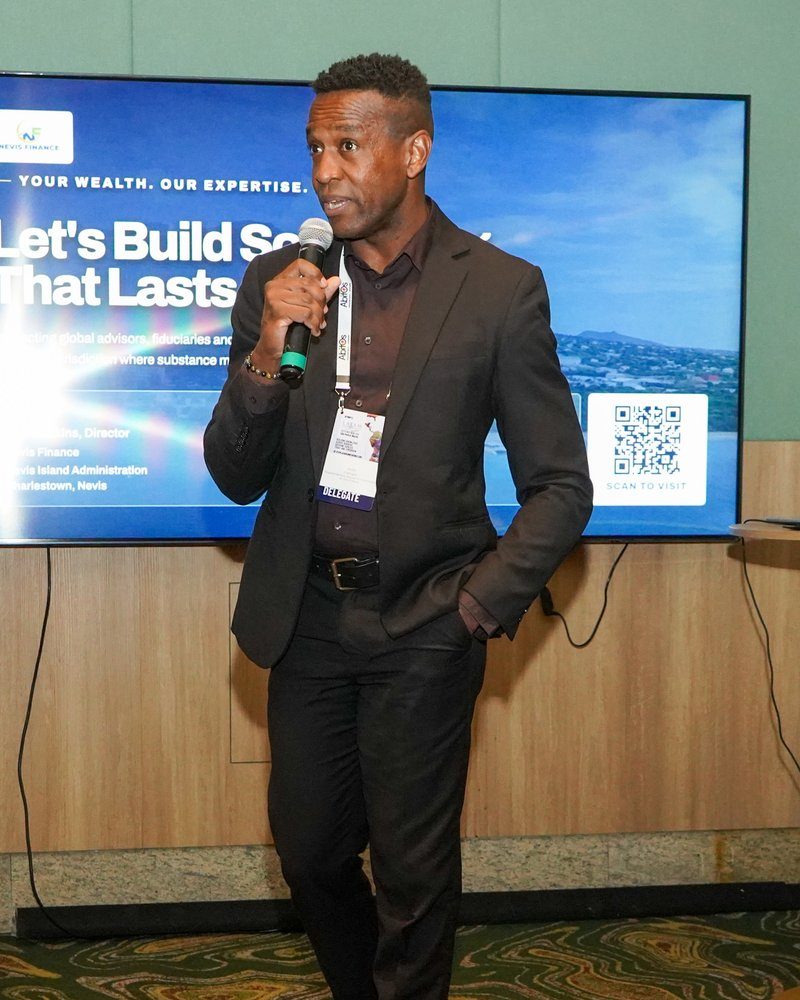
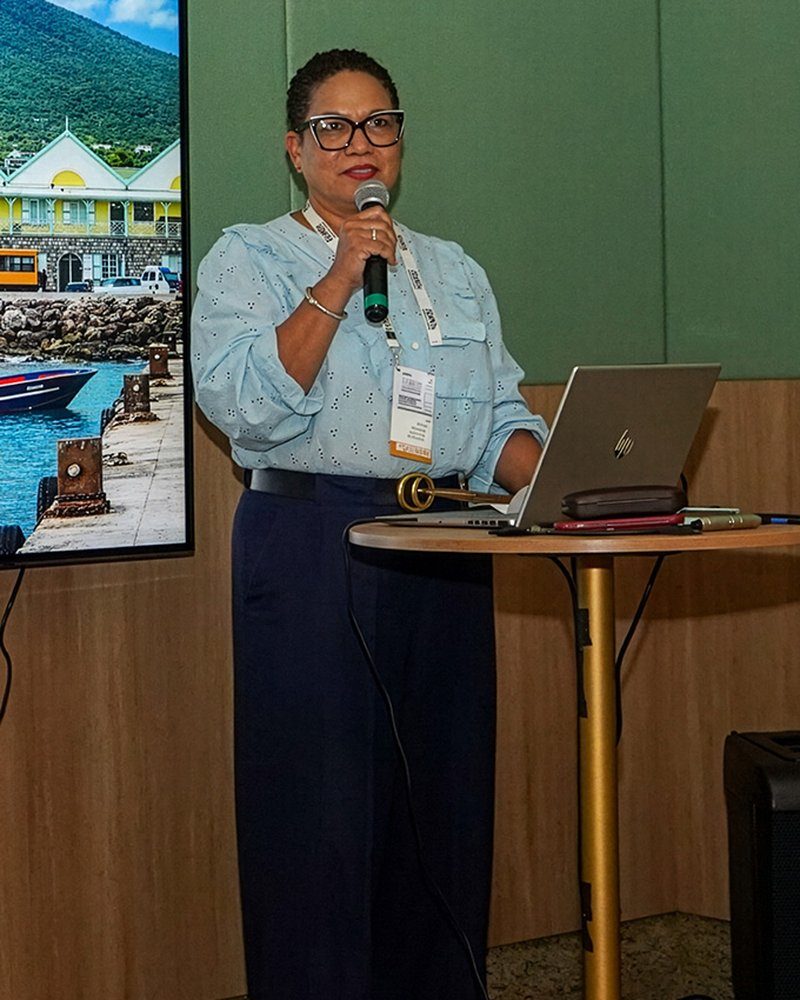
Hélène Anne Lewis, Andre Cadogan and Rita O. Hawkins, FCCA, speaking at the Nevis Finance reception, STEP LATAM, São Paulo, 17 September 2026.
Our first edition looked ahead to the STEP LATAM conference. Nevis Finance has now completed its participation in São Paulo, Brazil, from 16 to 18 September, as Speaker Gift Sponsor, and hosted a reception on 17 September.
The conference brought us into contact with lawyers, fiduciaries and wealth advisers serving Latin American clients. Discussions showed greater familiarity with Nevis among contacts from Panama and parts of Central America. Brazilian participants highlighted the need for more awareness and product information.
A Brazilian lawyer subsequently visited Nevis and proposed seminars and introductions through professional networks. We are exploring this opportunity as part of our Latin American follow-up. The findings will help shape future outreach, with introductory education in less familiar markets and more technical discussions where relationships are already established.
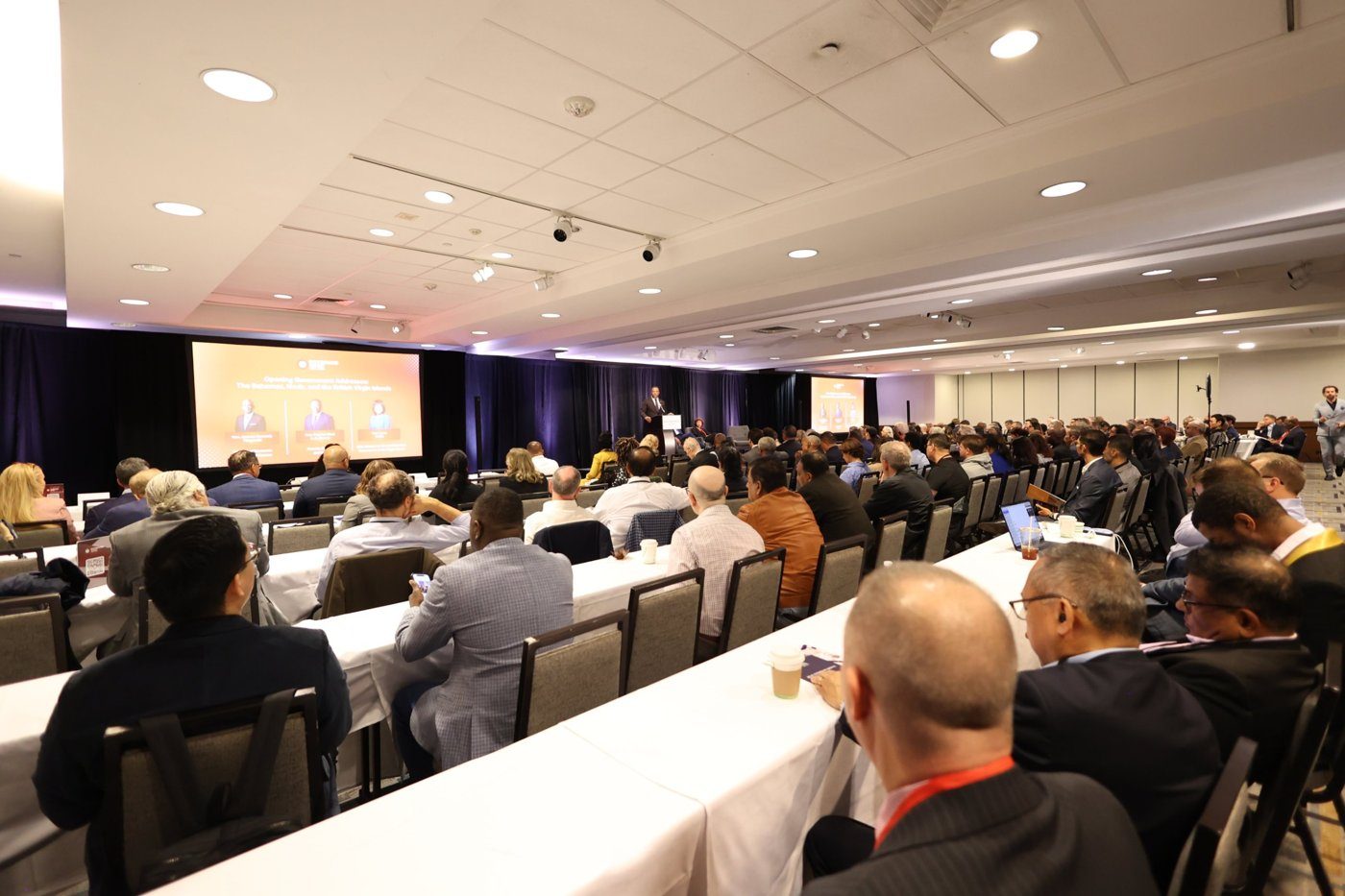
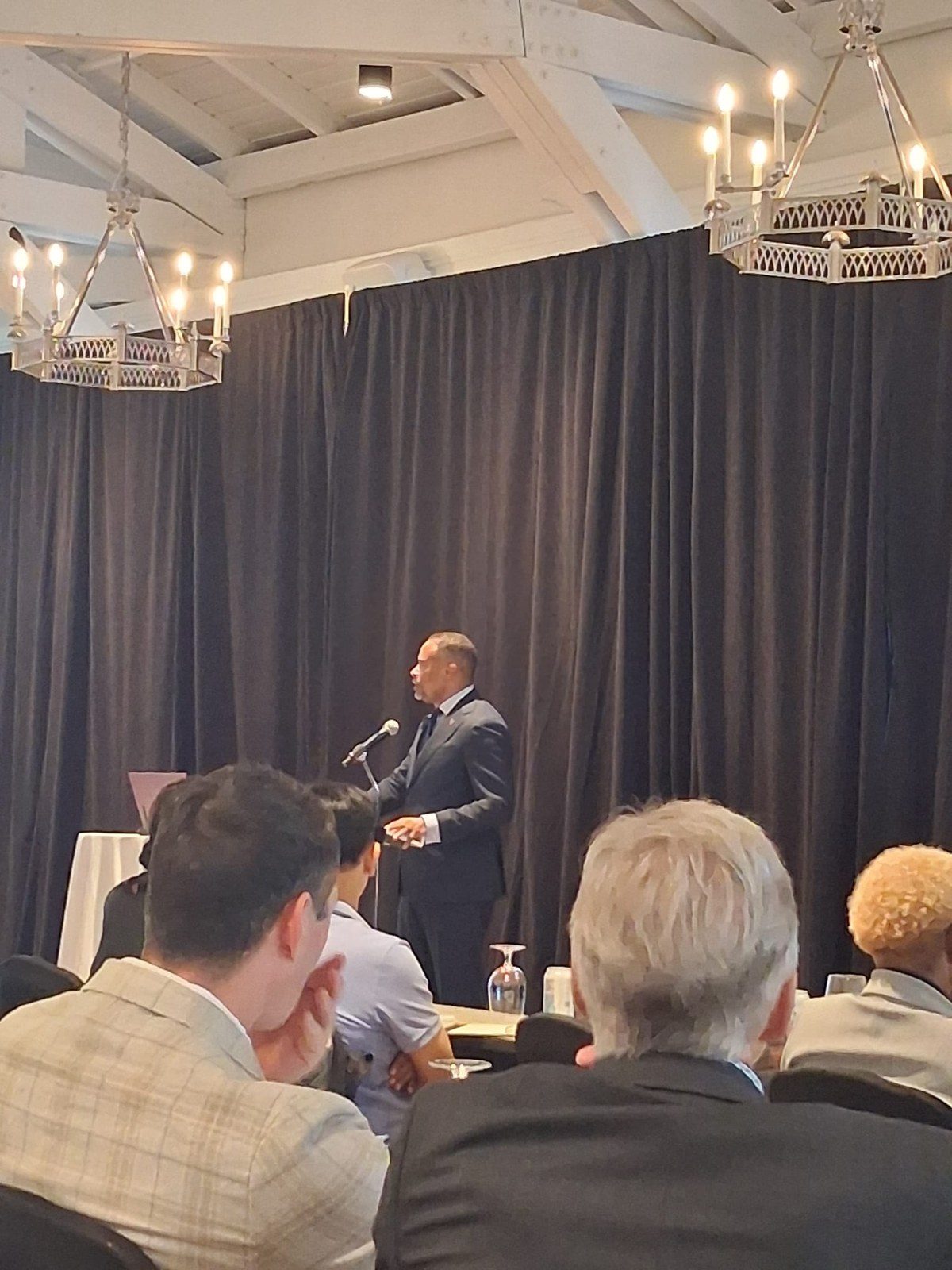
Premier the Honourable Mark A G Brantley delivers an opening government address at the Outbound Summit USA 2026, New York Hilton Midtown.
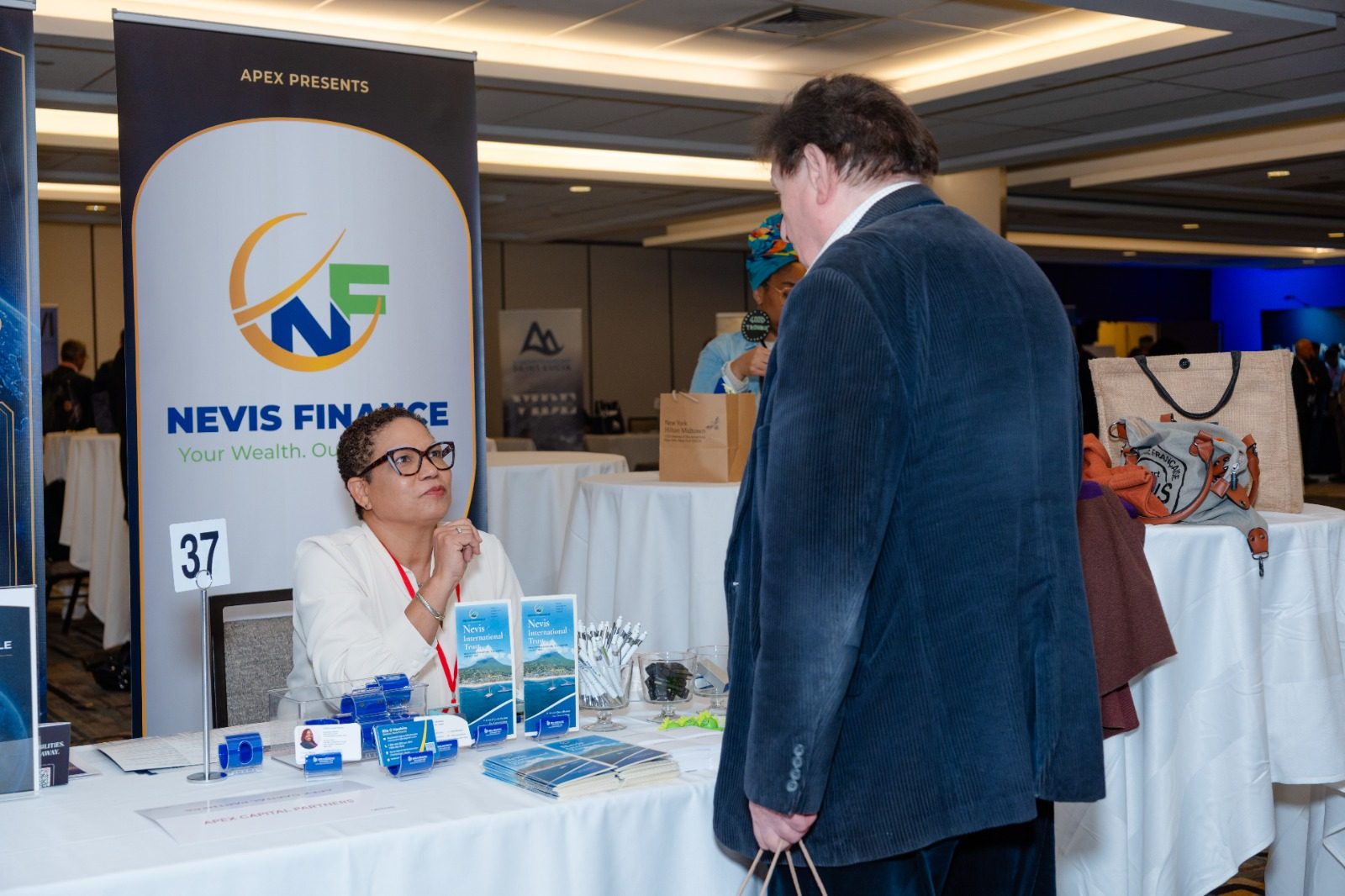
The Nevis delegation at the Outbound Summit, held from 24 to 26 September, was led by Premier the Honourable Mark A G Brantley. Nevis Finance shared a booth with Apex Capital, participating in its capacity as a citizenship-by-investment agent, and participated in the panel on Cross-Border Corporate and Wealth Structuring Opportunities. Daisy Joseph Athall also contributed to the panel on protecting the family legacy.
Conversations included professionals exposed to liability risks and construction and real estate developers seeking information on ownership, asset protection and succession planning. Our follow-up is generating requests for further information and registered agent introductions.
The US market will be developed through relationships with tax consultants and family offices, bringing the specialist input needed to assess the relevance of Nevis structures to clients’ circumstances.
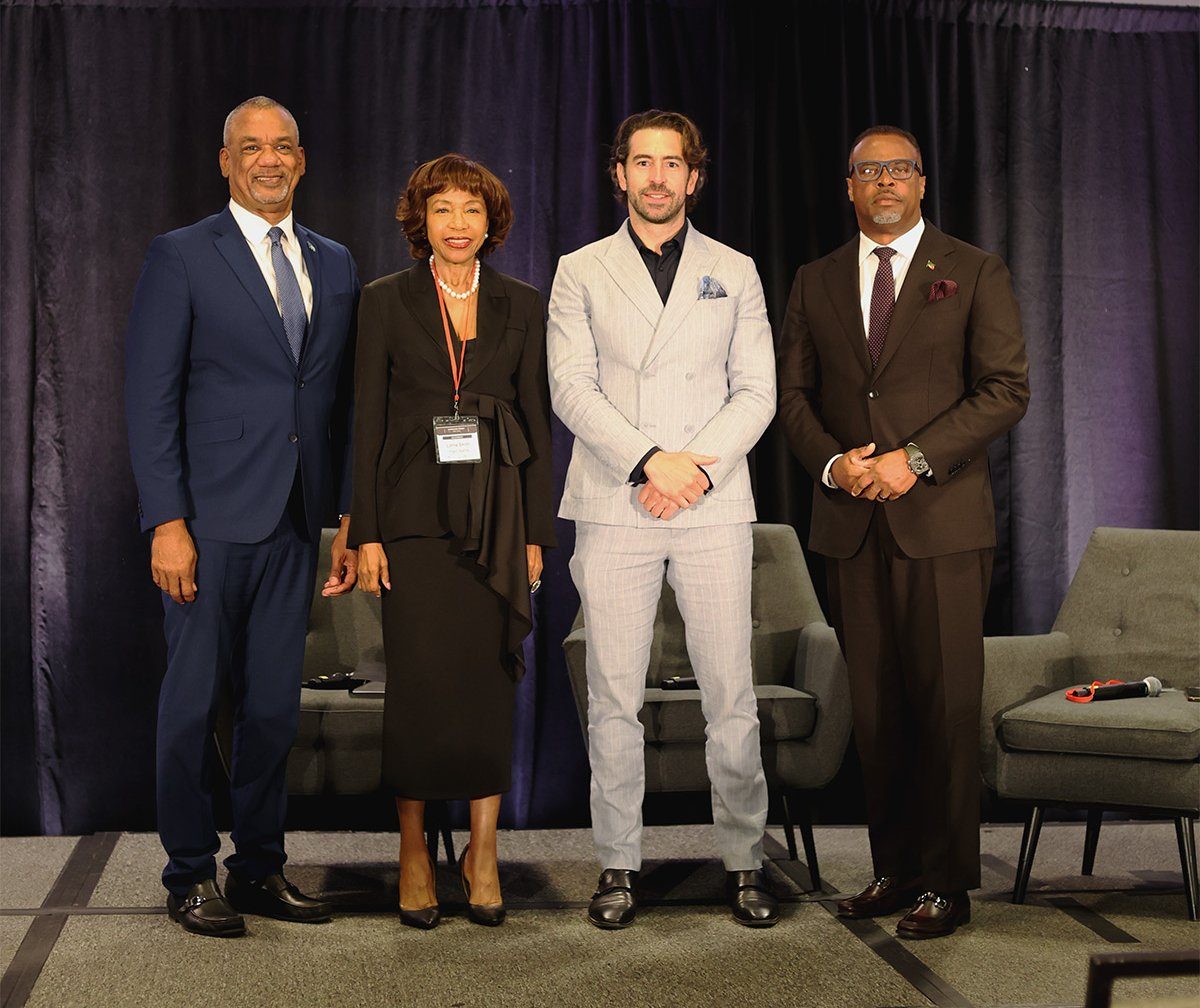
Professional engagement at the Nevis Finance stand, Outbound Summit USA 2026.Pictured from left to right at the Outbound Summit USA 2026 in New York: Senator the Honourable Jerome K. Fitzgerald, Minister of Economic Affairs, The Bahamas; the Honourable Lorna Smith, OBE, Minister for Financial Services and Economic Development, British Virgin Islands; Matthew Sumner, Managing Director, Outbound Investment Group; and the Honourable Mark A. G. Brantley, Premier of Nevis.
10 October 2026
Asset Protection Conference: Bringing the Conversation to Nevis
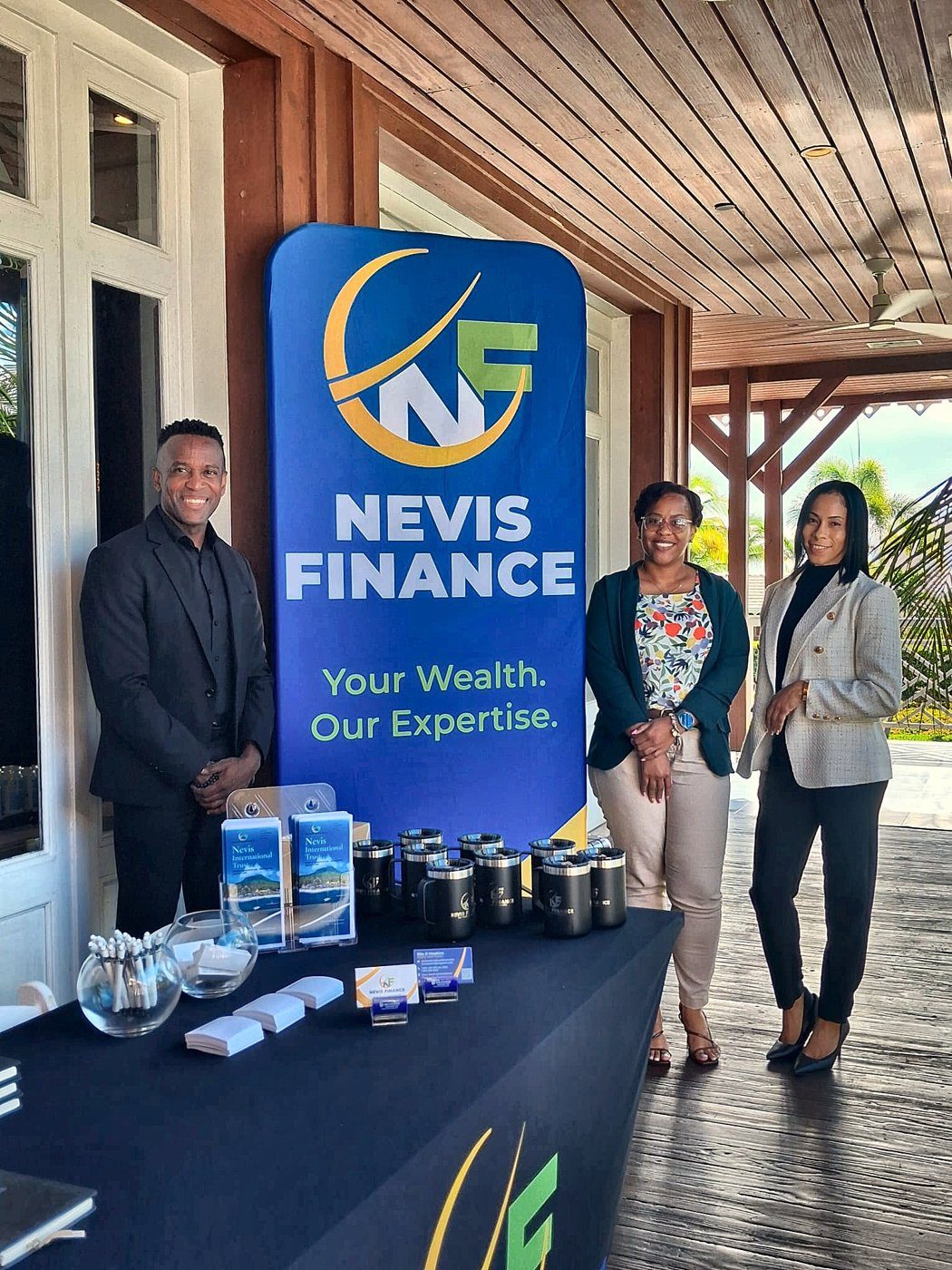
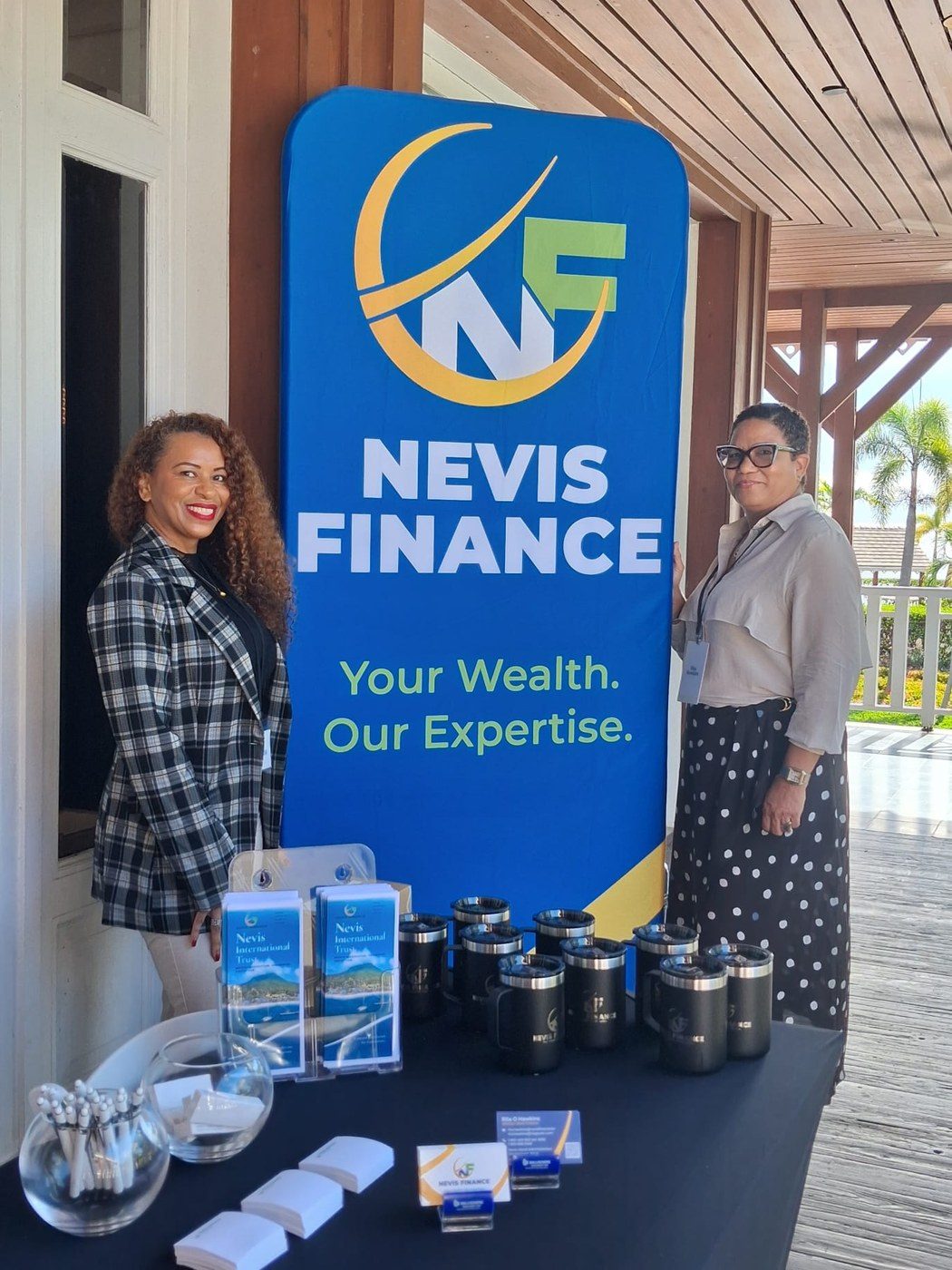
Senior Regulator Andre Cadogan (far left) with fellow representatives of the Financial Services Regulatory Commission, Nevis Branch, at the Asset Protection Conference.Nevis Finance representatives Vivian Stapleton and Rita O. Hawkins at the Asset Protection Conference.
The Asset Protection Conference at Four Seasons Resort Nevis on 10 October brought visiting legal and wealth specialists together with local professionals. The Premier delivered the keynote address. Andre Cadogan, Senior Regulator at the Financial Services Regulatory Commission’s Nevis Branch, spoke on ‘Smart Regulations’.
Premier the Honourable Mark A G Brantley delivers the keynote address at the Asset Protection Conference, Four Seasons Resort Nevis, 10 October 2026.
Nevis Finance supported promotion and local professional participation. The event provided further insight into market interest and the role of specialist advisers in wealth preservation and succession planning.
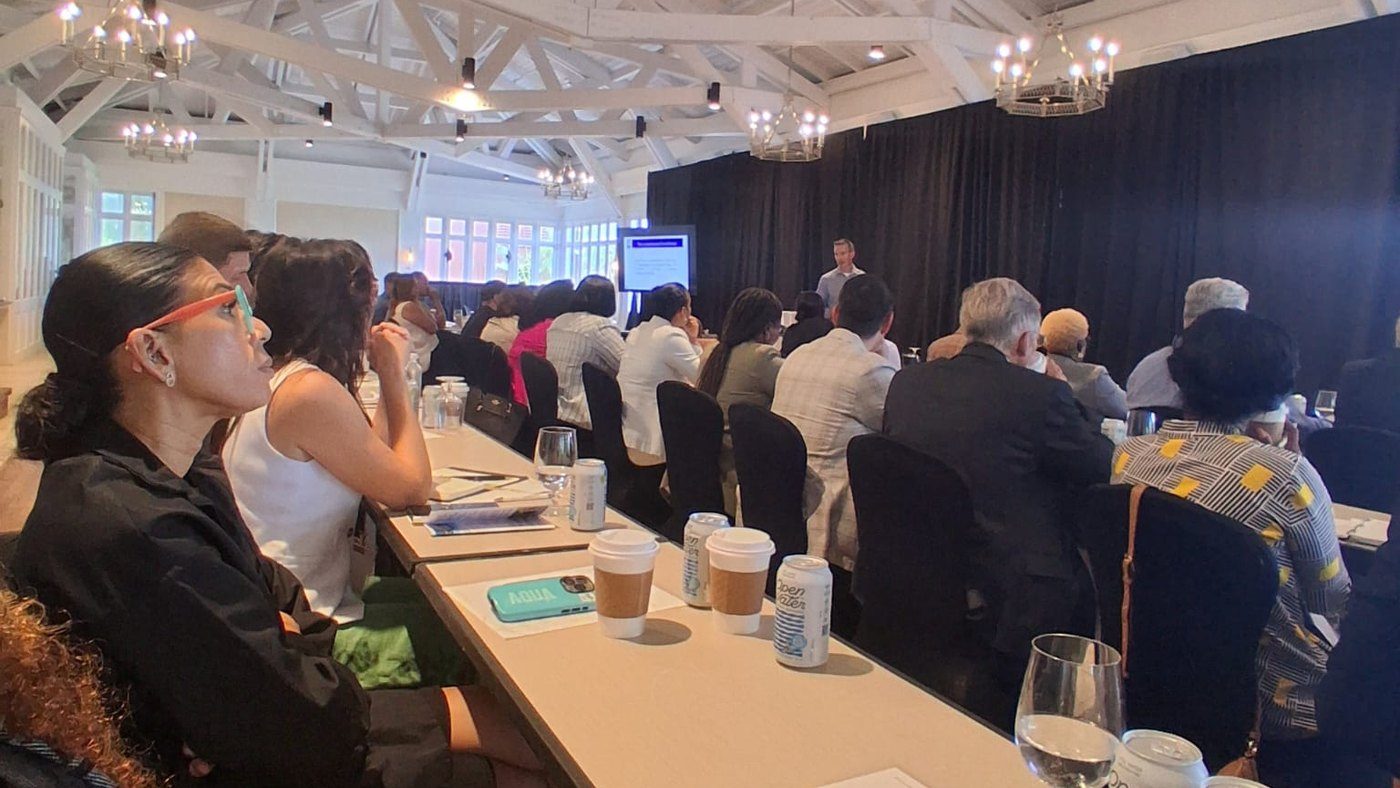
Delegates attending the Asset Protection Conference at Four Seasons Resort Nevis.
Continuing the Conversation
Conference contacts are being followed up according to their interests, with product information and practitioner introductions where requested. The next industry consultation will provide an opportunity for registered agents and trust and corporate service providers (TCSPs) to share their own observations from these engagements.
Feature 03 / 09Market Focus
Building Relationships in Panama and Brazil
Panama City, Panama—connecting with Latin America’s international business and financial services community.Charlestown harbour, Nevis—home to an established international financial services jurisdiction.
Panama: From Opportunity to Continued Engagement
Our first edition identified Panama as a timely opportunity for Nevis and looked ahead to regional conversations at STEP LATAM. Since then, engagement with Panamanian professionals has continued, providing a basis for developing those relationships further.
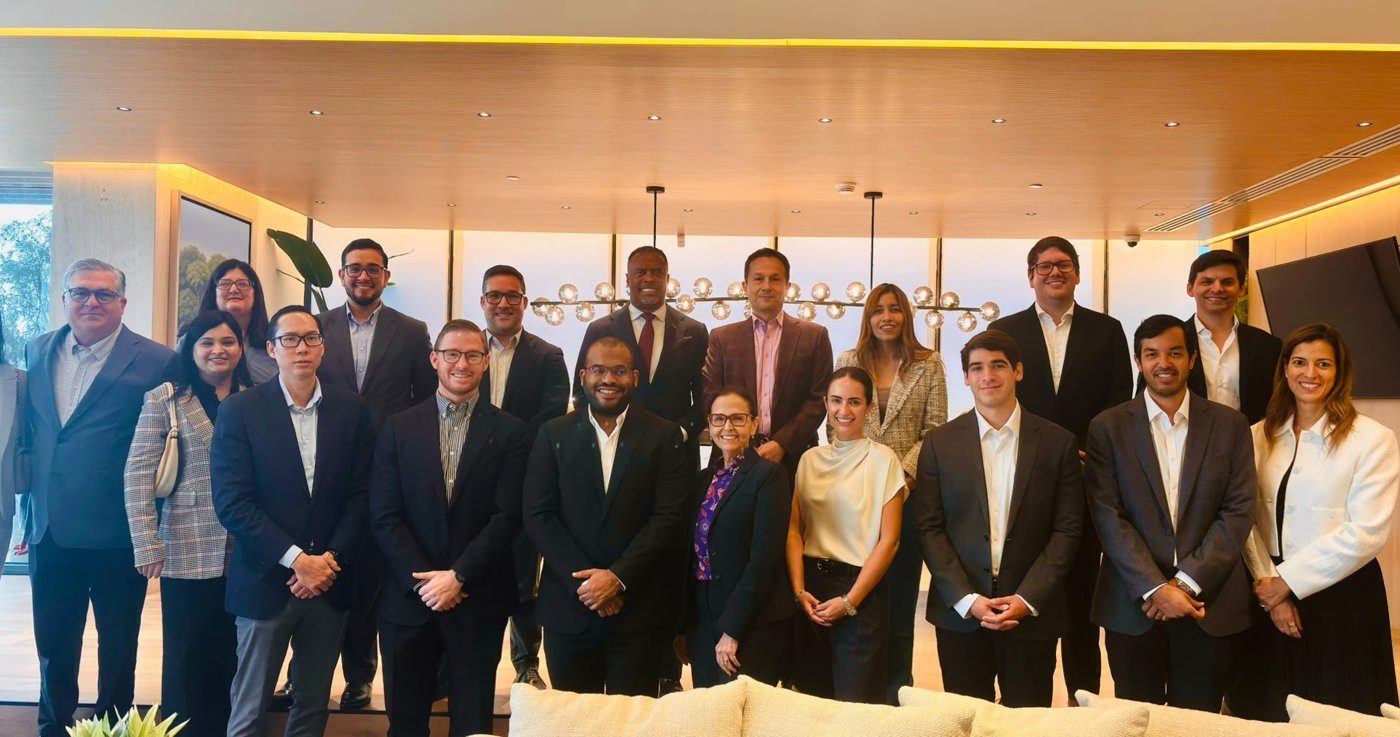
Premier Hon. Mark Brantley recently met leading law firms and financial services providers in Panama. Facilitated by Quijano & Associates, the engagement provided an opportunity to reinforce Nevis’ position as a jurisdiction for international business and wealth structuring. We thank Quijano & Associates for bringing together key industry professionals and facilitating the discussion.
This builds on the conversations at STEP LATAM in São Paulo, where contacts from Panama and parts of Central America demonstrated greater familiarity with Nevis. Established awareness gives us an opportunity to move towards more detailed discussions about professional services and clients’ structuring needs.
Nevis Finance is planning a Brazil and Panama roadshow in 2027, linked with proposed participation in STEP LATAM in Panama City from 22 to 24 September. The proposed approach would combine professional meetings and education with conference engagement. The route, participants and arrangements remain subject to confirmation.
The priority is sustained engagement: sharing accurate information, understanding advisers’ needs and connecting relevant enquiries with Nevis practitioners. Recent meetings provide a foundation for that work.
Premier Hon. Mark Brantley with leading law firms and financial services providers in Panama, at a meeting facilitated by Quijano & Associates.
Brazil: Building Professional Connections
STEP LATAM in São Paulo provided an opportunity to introduce Nevis to Brazilian advisers and discuss its relevance to international wealth and business planning.
Conversations highlighted interest in understanding the jurisdiction’s structures and the professional services available to support clients’ needs. They also reinforced the value of clear, accessible information and continued dialogue between Brazilian advisers and Nevis practitioners.
Nevis Finance welcomes enquiries from professionals in Brazil seeking to learn more about the jurisdiction and connect with its financial services community.
Feature 04 / 09Wealth Planning
When Should Asset Protection Begin?
Building wealth takes time and effort. Planning how to protect it should begin early, ideally before acquiring significant assets or taking on the risks associated with a business or investment.
Before acquisition
Consider how the asset will be owned, the potential liabilities, appropriate insurance and succession arrangements. This allows protection to form part of the original plan. The approach will depend on the asset’s location and type, the owner’s residence and the applicable legal and tax requirements.
While building wealth
Review the arrangements as wealth and responsibilities grow. New investments, business expansion, changes in residence or family circumstances may affect whether the existing approach remains suitable.
After acquisition
Owning an asset does not mean it is too late to plan. However, existing debts, financial circumstances and known or threatened claims must be assessed before changing ownership or transferring assets.
Why timing matters
Waiting until a dispute arises can limit the available options. A claim does not need to have reached court for a transfer to attract scrutiny. Transfers intended to hinder creditors—or which leave someone unable to meet their obligations—may be challenged under applicable law.
The rule of thumb is simple: plan before a problem creates urgency, and review the plan as circumstances change. Early planning provides time to obtain appropriate advice and put suitable arrangements in place.
Feature 05 / 09Feature Article
Compliance Begins with Good Governance
By Rita O. Hawkins, FCCA Director, Nevis Finance
Compliance is often discussed as the responsibility of the compliance officer. Yet many of the problems that reach that officer begin elsewhere: an ownership change that was not recorded, a payment with no supporting explanation, a decision taken without the right authority or an accounting record that no longer reflects the assets held.
A compliance framework depends on the quality of information produced by the business. If that information is incomplete or unreliable, even a carefully written policy will be difficult to apply. Good corporate and fiduciary administration therefore belongs at the centre of risk management.
Good Governance in Practice
Keep ownership and control records current.
Maintain reliable financial information.
Verify authority before acting.
Document decisions and their rationale.
Address concerns through appropriate review and escalation.
Records that explain the arrangement
A file should tell a coherent story. It should show why the arrangement exists, who owns or controls it, who has authority to act and what transactions have taken place. Governing documents, registers, minutes, resolutions, financial records and correspondence should support that account.
Consider a company whose bank records show payments to an individual, but whose file does not explain whether those payments were remuneration, a loan, a distribution or payment for services. Without that explanation, an administrator may struggle to assess whether the payment fits the activity, whether it was authorised and how it should be recorded.
The same applies when a trustee makes a distribution but the file does not show the request, the consideration given or the decision taken. A record created at the time is more useful than an explanation reconstructed months later.
Ownership information must remain current
Information gathered during onboarding is a starting point. Subsequent changes can alter the risk and administration of an arrangement. An interest may be transferred, a person exercising control may change or a new party may acquire authority to give instructions.
The service provider needs a practical way to identify those changes and obtain the relevant documents. A file that names the original owner while the organisation accepts instructions from someone else leaves important questions unanswered. Corporate administration and compliance should use the same current information.
Understanding funds and transactions
Knowing the identity of a client does not explain every transaction. The administrator should understand what a payment is for and how it relates to the arrangement’s purpose. Supporting contracts, invoices, sale documents or other records provide the context needed for review.
Source-of-funds information should also be specific enough to be useful. A general description such as “business income” may leave unanswered questions about the business, the transaction and the route by which the funds arrived. Where a transaction differs from expected activity, the difference should be understood and addressed.
These responsibilities require communication with clients and advisers, a clear record of their responses and a process for referring unresolved matters to the appropriate person.
Decisions and authority
Good governance requires clarity about who can decide, who can instruct and who can carry out an action. A director’s role is different from a shareholder’s. A trustee’s responsibility is different from a beneficiary’s request. A person with access to a banking platform may not have authority to approve every payment.
Authority should be traceable to the documents governing the arrangement. For a company, its constitutional documents, resolutions and approved mandates establish who may make decisions and give instructions, subject to applicable law. Where a trust exists, the trust deed defines the powers of the trustee and any other persons given a role under it, also subject to applicable law. The trustee’s decisions should be properly recorded.
Administrators should therefore check both who is giving an instruction and the authority under which that person acts. An instruction alone is not evidence that the person has the power to require the action.
Procedures should reflect these distinctions. Appropriate checks between preparation, approval and execution help reduce errors and identify unusual instructions. Where a small team cannot separate every function, review and oversight should provide an effective check.
The objective is to make responsibility clear and decisions traceable. A process that exists only in someone’s memory is difficult to review or for another person to continue.
Conflicts need attention
An administrator may serve related companies, family members or arrangements with different interests. A proposed transaction may benefit one party while placing another at a disadvantage. Personal or professional connections can also affect how a decision is viewed.
Identifying a potential conflict early allows the relevant decision-makers to consider it properly. The matter should be recorded and handled in accordance with applicable duties, governing documents and professional advice. Silence does not resolve a conflict; it makes the reasoning harder to establish later.
Accounting supports oversight
Financial records help those responsible understand what the arrangement holds and what has changed. Incomplete records may leave the organisation without a reliable picture of its cash, commitments or distributions, weakening both decision-making and the review of activity.
Regular reconciliations and consistent recording of transactions make missing information easier to identify. They also help advisers and administrators answer questions without relying on informal explanations.
A shared responsibility
The compliance officer has an important role in review, advice and escalation. That role works best when directors, trustees, administrators and other staff understand their responsibilities and provide reliable information.
An effective organisation allows someone to ask a question, challenge an instruction or pause an action while a material issue is resolved. Senior personnel should support that process and ensure that commercial pressure does not undermine routine checks.
Good governance can be seen in everyday practice: records kept current, authority checked, transactions understood, decisions documented and concerns addressed. Those actions build the information and accountability on which compliance depends.
Compliance is not simply a function. It is the product of how an organisation conducts its business.
Feature 06 / 09Industry Update
Guidance and Legislative Developments
Banker’s References and Alternative Documentation
The Financial Services Regulatory Commission (FSRC) has provided guidance on banker’s references and alternative documentation, recognising that reference letters can be difficult to obtain from some international financial institutions.
Signed banker’s references remain the preferred first option where reasonably obtainable. Where reasonable efforts have been unsuccessful, reliable and independent alternatives may be considered as part of a documented assessment of the applicant’s risk.
The guidance identifies the following possible alternatives, as appropriate to the applicant and circumstances:
• Certified bank statements.
• Bank account confirmation letters or other verifiable bank-issued account documentation.
• Credit reports from recognised credit bureaus.
• Management accounts and audited financial statements, particularly for corporate applicants.
• Tax returns or tax clearance certificates.
• Source-of-funds and source-of-wealth documentation, such as sale agreements, dividend statements, business ownership records or inheritance documents.
Using alternative documents does not remove existing customer due diligence obligations or replace references that can reasonably be obtained. Reliance on alternatives should be supported by a recorded rationale that takes account of the applicant’s nature, complexity and risk profile.
Practitioners should consult the full guidance when considering alternative evidence.
Legislative Update: Practical Changes to Nevis’ Corporate Framework
Four amendment Ordinances published on 15 October 2026 introduce changes to document filing, registered-agent procedures, regulatory oversight and enforcement. The following highlights explain their practical relevance to practitioners and clients.
Filing documents in languages other than English
The Nevis Business Corporation (Amendment) Ordinance, 2026 (No. 3) and Nevis Limited Liability Company (Amendment) Ordinance, 2026 (No. 4) expressly permit instruments filed under their respective principal Ordinances to be submitted in English or another language.
Where an instrument is submitted in another language, the Registrar must arrange for its translation into English by or under the Registrar’s authority. The translation prepared or certified by the Registrar becomes part of the entity’s official records and is treated as the official English version.
For international clients and their advisers, these provisions offer greater flexibility when submitting documents originating in other languages, while retaining an official English record.
Changes of registered agent
The business corporation and LLC amendments also provide for a notice of change of registered agent to be filed by the entity’s registered agent or by an attorney-at-law within St. Kitts and Nevis acting on its behalf.
An attorney making the filing does not need to be licensed as a registered agent for that purpose and may pay related Registry fees, including outstanding statutory fees. The amendments also allow Regulations to specify circumstances in which an attorney may not make the filing.
Importantly, changing registered agent does not extinguish liabilities to the former agent. The former agent retains the right to recover service charges lawfully due and to dispute the sufficiency of payment.
Oversight of non-profit companies
The Companies (Amendment) Ordinance, 2026 (No. 2) expressly places non-profit companies registered under the Companies Ordinance within the regulatory authority of the Nevis Branch of the FSRC.
For the purposes of combating money laundering, terrorist financing, proliferation financing and related predicate offences, these companies are made subject to the legislation specified in the amendment.
Those responsible for non-profit companies should review their governance and compliance arrangements against the applicable requirements.
Service of documents and stronger penalties
The Companies amendment also revises provisions governing service of notices and documents on the Registrar, companies, shareholders and directors. It expressly recognises service of civil proceedings at a company’s registered address.
These changes reinforce the practical importance of maintaining current address records and procedures for promptly receiving and escalating legal documents.
Several offence provisions are also amended to provide fines of $10,000. Certain provisions include potential imprisonment and liability for directors or officers who knowingly authorise, permit or acquiesce in the relevant contravention.
Limited partnership correction
The Nevis Limited Partnership (Amendment) Ordinance, 2026 (No. 1) corrects duplicate subsection numbering in section 4 of the principal Ordinance. This is a technical correction to statutory references.
Practitioners should consult the amendments alongside the relevant principal Ordinances when reviewing their procedures or advising clients.
Nevis Online Gaming Update: Prediction Market Licence
The Nevis Online Gaming Authority (NOGA) has announced a dedicated Prediction Market Licence for platforms where users trade contracts linked to the outcomes of future events.
Separate from its existing B2C and B2B gaming licences, the new category includes conditions addressing market integrity, event resolution, customer funds protection and AML/KYC requirements.
The Nevis Corporate Registry recorded 3,137 registrations between 1 January and 30 September 2026.
Source: FSRC quarterly reports and monthly statistical bulletins. Registrations include transfers in and continuations.
Registrations by category
2,306
IBCs
640
LLCs
151
Trusts
40
Foundations
Feature 08 / 09Industry Spotlight
The Professionals Behind the Jurisdiction
This recurring feature introduces the experience of Nevis practitioners and the perspectives they bring to international clients. In this edition, we hear from Diana Claxton Whittaker and Dahlia Joseph Rowe.
Diana Claxton Whittaker
Claxton Whittaker & Associates
Diana Claxton-Whittaker is an attorney-at-law and founder of Claxton Whittaker & Associates, with 12 years of experience in Nevis’ financial services industry. Her practice covers corporate law, trust and corporate services, and anti-money laundering and counter-terrorist financing compliance. She began her career in October 2014 as Legal Advisor to an established Nevis trust and corporate services provider, subsequently holding senior executive and compliance responsibilities before establishing her firm. She holds a Bachelor of Laws with Honours from the University of the West Indies and a Legal Education Certificate from the Norman Manley Law School, and is a Certified Anti-Money Laundering Specialist.
What changes are you seeing in international client needs?
Clients are increasingly looking for structures that offer asset protection, privacy, succession planning and long-term stability, while remaining compliant with international regulatory requirements. There is also a greater need for practical, tailored solutions rather than a one-size-fits-all approach.
Where do you see opportunities for Nevis?
I see opportunities in international wealth planning, trusts, foundations, LLCs and succession planning, particularly as clients seek reliable jurisdictions for long-term asset holding and preservation. Nevis has an opportunity to strengthen its international profile and ensure that advisers understand the range and flexibility of the structures available here.
What differentiates Nevis in your area of practice?
Nevis offers a strong legislative framework for trusts and corporate structures, particularly in asset protection. Equally important is the ability to provide clients with practical, personalised service and direct access to professionals who understand both the legislation and the realities of international structuring.
What do international advisers most often misunderstand about Nevis?
I think some advisers underestimate the sophistication of our legal framework and the range of structures available in Nevis. There is sometimes a perception that Nevis is simply an asset protection jurisdiction, when, in fact, it offers much broader opportunities for wealth structuring, succession planning and long-term asset management.
What should the industry focus on next?
The industry should focus on maintaining high professional and compliance standards, improving international awareness of Nevis, and strengthening collaboration between local practitioners and international advisers. We need to continue demonstrating that Nevis is competitive, credible and well regulated, with the capacity to meet the evolving needs of international clients.
Dahlia Joseph Rowe
Joseph Rowe
Dahlia Joseph Rowe is an Attorney-at-Law and founding partner of Joseph Rowe, a boutique law firm with offices in Nevis, St. Kitts and Grenada. She has extensive experience in international financial services, specializing in corporate and commercial law, trusts, asset protection, wealth structuring, and citizenship by investment.
Through Joseph Rowe and its affiliated licensed trust and corporate services provider, Belvedere Management Corp., Dahlia advises international clients on cross-border transactions, corporate structures and wealth preservation strategies.
A strong advocate for the continued growth and development of Nevis’s financial services industry, Dahlia is committed to promoting the jurisdiction internationally, strengthening regulatory compliance and showcasing Nevis as a sophisticated and reputable international financial centre.
What changes are you seeing in international client needs?
International clients are becoming increasingly sophisticated in their approach to wealth management, asset protection and succession planning. While tax efficiency remains a consideration, we are seeing greater emphasis on asset preservation, political and economic stability, confidentiality, succession planning and the ability to structure assets across multiple jurisdictions.
Clients are also much more conscious of regulatory compliance and reputational risk. They want structures that are not only legally effective but also transparent to the relevant authorities, compliant with international standards and capable of withstanding scrutiny.
We are also seeing growing demand for integrated solutions. Clients are no longer simply looking to establish an offshore company or trust. They are seeking comprehensive advice that addresses their commercial objectives, family circumstances, long-term wealth preservation and cross-border legal obligations.
This evolution presents an opportunity for jurisdictions like Nevis that can offer sophisticated legal structures supported by experienced professionals and a credible regulatory framework.
Where do you see opportunities for Nevis?
I believe Nevis is exceptionally well positioned to expand its presence in the international wealth management and financial services market.
Our greatest opportunities lie in private wealth structuring, asset protection, estate and succession planning, and the provision of corporate and fiduciary services to internationally mobile individuals, entrepreneurs and families.
There is also considerable potential to strengthen our relationships with international law firms, family offices, wealth managers and other professional intermediaries who require reliable jurisdictions in which to structure and administer their clients’ assets.
Importantly, I believe our growth strategy should be focused on the quality rather than simply the volume of business we attract. We should position Nevis as a jurisdiction of choice for sophisticated clients who value legal certainty, regulatory integrity, professional expertise and responsive service.
Nevis has an excellent product. Our challenge, and indeed our opportunity, is to ensure that the international market fully understands what we have to offer.
What differentiates Nevis in your area of practice?
Nevis offers a particularly compelling combination of a well-established legal framework, effective asset protection legislation, a respected regulatory environment and highly personalised professional services.
Our international business companies and trusts have long been attractive vehicles for legitimate international structuring and wealth preservation. The jurisdiction’s asset protection legislation, including its treatment of foreign judgments and creditor claims, provides distinctive protections, subject of course to applicable statutory safeguards and the circumstances of each case.
However, I believe what truly differentiates Nevis is not simply our legislation, but the ecosystem that supports it. We are a relatively small jurisdiction, and that brings significant advantages. Clients and international advisers have access to experienced professionals who understand the legal and regulatory environment and can provide practical, commercially focused advice.
The Nevis Financial Services Regulatory Commission also plays an important role in maintaining the credibility of our industry. Its commitment to regulatory oversight, professional development and fostering a culture of compliance is, in my view, one of the jurisdiction’s greatest strengths. Nevis boasts a strong culture of compliance, which strengthens its competitive position as an international financial services jurisdiction.
Ultimately, Nevis combines the sophistication of an established international financial centre with the accessibility and responsiveness of a smaller jurisdiction.
What do international advisers most often misunderstand about Nevis?
I believe one of the most common misconceptions is that Nevis is simply a traditional offshore jurisdiction offering companies and trusts for tax planning or secrecy.
That perception does not adequately reflect the sophistication of our legal framework, the evolution of our regulatory environment or the range of legitimate commercial and private wealth objectives that Nevis structures can serve.
Another misconception is that asset protection means placing assets beyond the reach of all creditors or legal proceedings. That is not the case. Nevis offers robust statutory protections, but these operate within a legal framework that recognises legitimate claims, applicable statutory exceptions and the importance of compliance.
International advisers sometimes also underestimate the depth of professional expertise available locally. Nevis has experienced lawyers, accountants, fiduciary professionals and corporate service providers who routinely work alongside international advisers on complex cross-border matters. The support ecosystem is phenomenal.
We need to continue educating the international market about what Nevis actually offers, rather than allowing outdated perceptions of offshore financial centres to define us.
What should the industry focus on next?
I believe our priorities should be regulatory excellence, innovation, professional development and greater international visibility.
First, we must continue strengthening our regulatory framework and ensuring that Nevis remains aligned with evolving international standards. In today’s environment, regulatory credibility is not simply a compliance obligation; it is a competitive advantage.
Second, we must embrace technology and modernise the way we deliver services. International clients expect efficiency, accessibility and seamless digital interactions. We must ensure that our systems and processes meet those expectations without compromising regulatory standards.
Third, we need to invest in our people. The long-term sustainability of our financial services industry depends on developing the next generation of skilled legal, accounting, compliance and fiduciary professionals.
Finally, we must be more deliberate in promoting Nevis internationally. We have a strong legislative foundation, an established industry and a compelling value proposition. But we cannot assume that the international market knows our story.
I would like to see greater collaboration between the regulator, government and private-sector service providers in positioning Nevis as a modern, well-regulated and sophisticated international financial centre.
Our future success will depend not merely on the strength of our legislation, but on the confidence that international clients and advisers have in the jurisdiction, its institutions and its people.
Feature 09 / 09Looking Ahead
Turning Engagement into a Continuing Programme
Next Industry Consultation
The next industry consultation is planned for Tuesday, 10 November 2026, at 2:00 PM via Zoom. It will bring findings from our recent engagements back to registered agents and TCSPs, provide an opportunity for industry participants to share their observations and discuss the proposed programme for 2027. Legislative and regulatory updates will also form part of the discussion.
Professional Development and Caribbean Outreach
Planning for 2027 includes professional development and a business development workshop in February, followed by proposed outreach in selected Caribbean or Organisation of Eastern Caribbean States (OECS) countries during March and April. These activities would combine practitioner education with professional relationship building. Details will be shared as arrangements are confirmed.
Building on Brazil and Panama
The proposed September roadshow would build on the Brazilian awareness needs and Panamanian relationships discussed in Market Focus. Nevis Finance intends to link outreach in Brazil and Panama with STEP LATAM in Panama City from 22 to 24 September 2027. Any additional Latin American markets remain under assessment, and the final route and participation have not been settled.
Further Market and Banking Development
US opportunities will be explored through specialist professional relationships, including tax advisers and family offices. Asian engagement remains under consideration.
Maintaining the Connection
Our LinkedIn page and website will support the newsletter with professional information and updates between engagements.
Registered agents, trust and corporate service providers, banks, lawyers, accountants and other stakeholders are invited to share relevant news, market observations and contributions for future editions. Please contact info@nevisfinance.kn.
Stay connected
Share industry news, market observations and contributions for future editions.